Your paid ads and inbound marketing generate inquiries, but the sales calendar still looks thin. Calls go unanswered, form submissions wait for assignment, and prospects disappear before anyone knows who owns the next step.
A weak lead conversion process turns new marketing spend into more expensive waste. Before you buy more traffic, repair response time, routing, follow-up, and measurement so added demand has a real path to revenue.
Key Takeaways
- Lead management creates value only when your team can respond, qualify, and follow up reliably.
- Missed calls, stale CRM stages, and unclear ownership raise acquisition costs without improving revenue.
- Track response time, contact rate, lead conversion rate, qualified opportunities, appointments, and closed revenue by source.
- Build a manual process first, then automate proven steps that prevent known failures.
- Increase acquisition gradually after response and follow-up performance remain stable.
Stop Buying More Leads Until You Fix What Happens to the Ones You Already Have
More inquiries don't solve an operating problem. They often make it harder to see. If your team can't contact leads and apply consistent lead qualification, a larger budget creates a larger pile of unattended prospects.
Research summarized in the Harvard Business Review's look at online sales leads found that many companies responded far too slowly. The widely cited five-minute benchmark is useful because intent fades quickly. However, it isn't a universal promise. Results vary by service type, channel, time of day, and whether a prospect needs immediate help or is gathering estimates.
How Lead Leakage Turns Marketing Spend Into Hidden Waste
Lead leakage happens at ordinary handoffs. A missed call gets no callback. A web form creates a lead capture and notification problem when alerts reach an unmonitored inbox. Duplicate records split the history. A sales rep assumes someone else replied. A lead receives one generic email, then gets labeled lost.
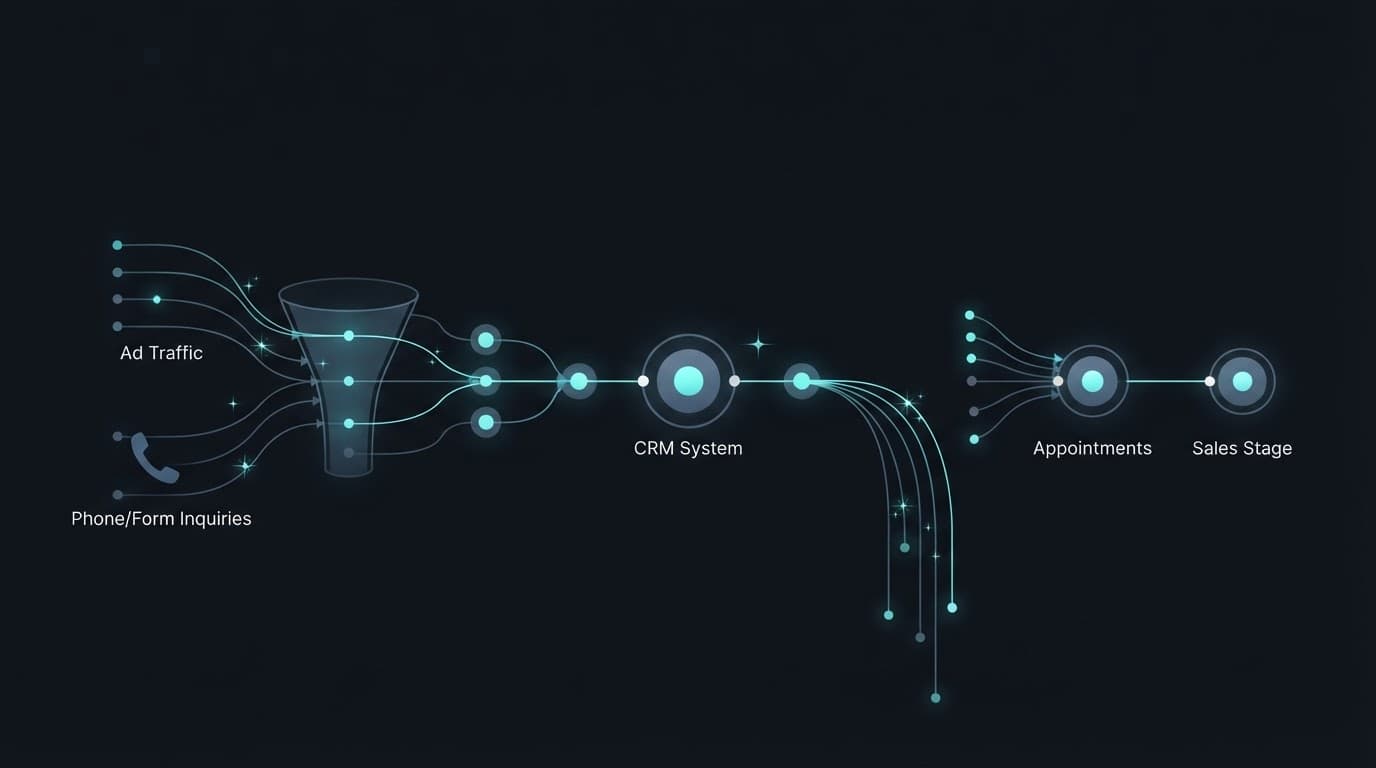 Each gap lowers appointments and close rates. As a result, cost per customer rises even when cost per lead looks acceptable. A full sales pipeline can still conceal leakage at different stages of the sales funnel. Records exist, but no one has moved them toward a decision.
A lead in the CRM is not proof of follow-up. It is only proof that the system captured a record.
These failures point to a broader lead management problem involving ownership, duplicate records, and stale follow-up.
The Numbers That Show Whether New Lead Volume Is Safe
Start with a simple weekly scorecard. Measure median response time and 90th-percentile response time, because averages can hide a long tail of neglected leads. Then track the percentage contacted, contact rate, follow-up completion, qualified lead rate, appointment or estimate rate, lead conversion rate, cost per qualified opportunity, and revenue by lead source.
Use consistent criteria and Lead scoring as a prioritization aid, not a substitute for human review. A Marketing qualified lead meets initial fit or engagement criteria. A Sales qualified lead has verified need, timing, or intent that justifies direct sales attention.
A Workato review of lead response-time research reinforces the practical point: speed affects the odds of qualification. Yet traffic and raw form fills should never trigger a budget increase when the lead conversion rate and downstream outcomes are unknown.
Repair the Lead Conversion Process Before Increasing Acquisition
First, map the buyer journey from inquiry through sale. Define the inquiry-to-sale workflow as a sales process before creating CRM stages. Then establish clear rules for "new," "contacted," "qualified," "booked," "won," "lost," and "nurture." Lead qualification needs written criteria, so every team member applies "qualified" consistently. This stage map, ownership model, and audit process form the operating foundation for lead management. Use lead scoring only after those qualification rules are clear, and measure the lead conversion rate at each stage.
Audit a recent sample of leads from every source. Compare the intended workflow with actual timestamps, ownership, outreach attempts, disposition, outcomes, and the resulting lead conversion rate. We usually find that the gap is less about effort and more about unclear process design.
Set Lead Response Time Standards That Match Buying Intent
Response time is an operating constraint, not a sales preference. Set a Speed to lead standard based on intent, staffing, channel, and hours of operation. During staffed hours, aim to contact high-intent inquiries within five minutes when practical. Calls, live chat, pricing requests, and emergency service requests deserve priority. Lower-intent content downloads can follow a different standard.
An automated acknowledgment confirms receipt, but it doesn't create trust or qualify a need. Use it to set expectations, then assign a human conversation. Secondary research collected by Rework on the five-minute rule repeatedly cites major drops in qualification likelihood after longer delays.
For after-hours leads, send an immediate confirmation, state the next response window, and create a task for the first available team member. Escalate any lead that remains untouched past its service-level target.
Build Lead Follow-Up That Continues After the First Attempt
One unanswered call is not a lost opportunity. A prospect may be driving, in a meeting, comparing providers, or waiting for approval from someone else.
Create a defined sales cadence using calls, voicemail, email, and SMS where consent and channel rules allow it. Each touch should support useful, context-aware sales engagement, such as available appointment times, an answer to the stated request, or a simple question that moves the conversation forward.
Assign every task to one person. Set a reasonable attempt limit and a clear stop rule. Move unready prospects into Lead nurturing when they need more time, information, or approval instead of marking them lost after one unanswered attempt.
Use CRM Automation to Remove Delay and Confusion
Automation should follow an agreed sales process. Once the manual workflow is proven, use sales automation for assignment by location or service, round-robin routing, duplicate detection, missed-call workflows, SLA timers, follow-up tasks, aging reports, and manager escalation. The CRM software should make ownership and overdue work visible.
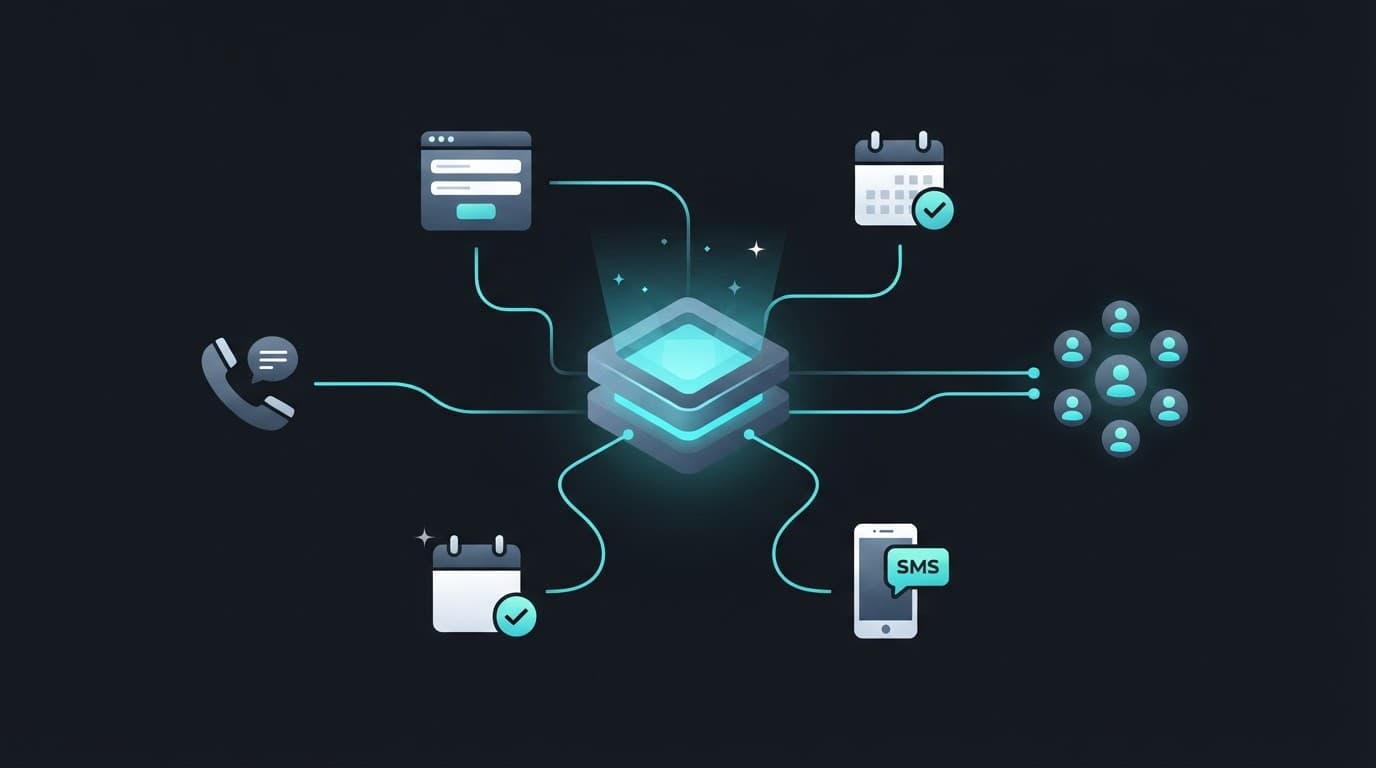 AI can draft a first reply, summarize a call, identify missing details, and remind staff about overdue tasks. It can't make a delicate pricing judgment or handle every high-value conversation. Human judgment still matters when the opportunity is complex.
Our lead conversion and CRM automation services connect these handoffs through customer relationship management, so the website, ads, inboxes, CRM, and sales team work from the same record.
Know When to Restart Lead Generation and Scale Without More Leakage
The goal isn't to stop marketing. The goal is to restore enough capacity for new leads to become qualified opportunities and revenue.
Restart when lead management is stable enough to support ownership, response, and consistent follow-up. Confirm that source tracking is accurate and conversion rates support your business economics. Then raise volume in controlled steps, not one large jump.
Compare More Leads With Better Conversion Before Changing the Budget
Consider a business that receives 100 leads and books 10 appointments. It raises spend and receives 150 leads, but its team still books only 10 appointments because follow-up capacity is weak.
Now consider the original 100 leads after routing and follow-up improve. The lead conversion rate rises from 10 to 15 appointments without extra acquisition spend. This form of conversion rate optimization focuses on routing, response, and follow-up, not only landing-page changes.
| Scenario | Leads | Appointments | Acquisition cost |
|---|---|---|---|
| Current process | 100 | 10 | Existing spend |
| More leads, weak follow-up | 150 | 10 | Higher spend |
| Better conversion | 100 | 15 | Existing spend |
A very small lead pool may still justify more acquisition while process work continues. However, adding demand shouldn't hide a known conversion failure.
Connect Marketing ROI to Qualified Opportunities and Revenue
Trace every lead source through inquiry, contacted lead, qualified opportunity, appointment, sale, revenue, and gross profit. A lead conversion rate matters more when connected to revenue, not just form fills.
Review performance with sales analytics by campaign, service type, location, response time, sales representative, and customer value. Consider whether the landing experience provides relevant social proof without treating it as a solution for poor follow-up. Reliable source-to-revenue data can also improve sales forecasting. The 2026 lead response-time statistics make the broader point: contact probability and qualification are different measures, so neither should stand in for revenue.
Find the Next Constraint Before It Becomes the Next Bottleneck
A faster lead conversion process can expose other limits, such as a full appointment calendar, slow estimates, weak discovery calls, pricing problems, or fulfillment capacity. Review the entire buyer journey from inquiry through fulfillment, not only the marketing dashboard.
If missed inquiries, inconsistent follow-up, or CRM gaps persist, use the Free Lead Leakage Audit to identify where prospects stop moving forward. For connected website, paid media, CRM, and follow-up work, visit Autonomics Agency Home / Services.
Frequently Asked Questions
How long should a service business follow up with a new lead?
The right duration depends on urgency and the buying cycle. Emergency repair inquiries may need several touches over a day or two. Larger projects can require thoughtful follow-up over several weeks. Build a sales cadence around buyer behavior, then track contact, appointments, and lead conversion rate. Prospects who aren't ready can enter lead nurturing instead of being marked lost after a few attempts.
Should every lead receive a phone call?
Phone calls work well for high-intent requests, especially when prospects share a number and request service, pricing, or an estimate. Still, some people prefer email or text. Use their selected channel when possible, and record preferences in the CRM.
Can automation replace a sales coordinator?
Automation can support a defined sales process through immediate acknowledgment, routing, reminders, and routine follow-up. A sales coordinator still adds value when leads need context, schedule changes, objection handling, or a judgment call. They also maintain useful sales engagement when a prospect has questions or needs personal guidance. The best setup removes repetitive work without removing accountability.
What counts as a qualified opportunity?
A qualified opportunity meets your agreed criteria for fit, need, timing, and ability to proceed. For a home-service company, that might include a serviceable address, requested work, realistic timing, and a booked estimate. Write the criteria down so marketing and sales report the same thing.
When should you ask for outside help?
Outside help makes sense when leads arrive but no one can reliably explain response time, ownership, follow-up, or revenue by source. A Contact / Strategy Conversation can help when the issue crosses marketing, CRM, and sales operations.
Better ROI Starts With Existing Demand
More leads can't rescue a system that loses the leads it already receives. Audit the last 30 to 90 days of inquiries, measure response and follow-up, repair ownership and CRM rules, then test higher acquisition volume.
When every inquiry has a clear next step, a more reliable lead conversion rate makes marketing ROI easier to evaluate and improve. Often, the fastest path to more booked revenue is converting today's demand more reliably.